


Environmental Geochemistry International (EGi) runs its own geochemistry laboratory at Castle Hill in northwest Sydney. How the testing is conducted is central to the value EGi offers clients. The laboratory employs chemists who know the methods well enough to notice when a result does not look right mid-test. They work closely with the EGi consultants who select the tests and interpret the results. Those were considerations behind our latest laboratory appointment.
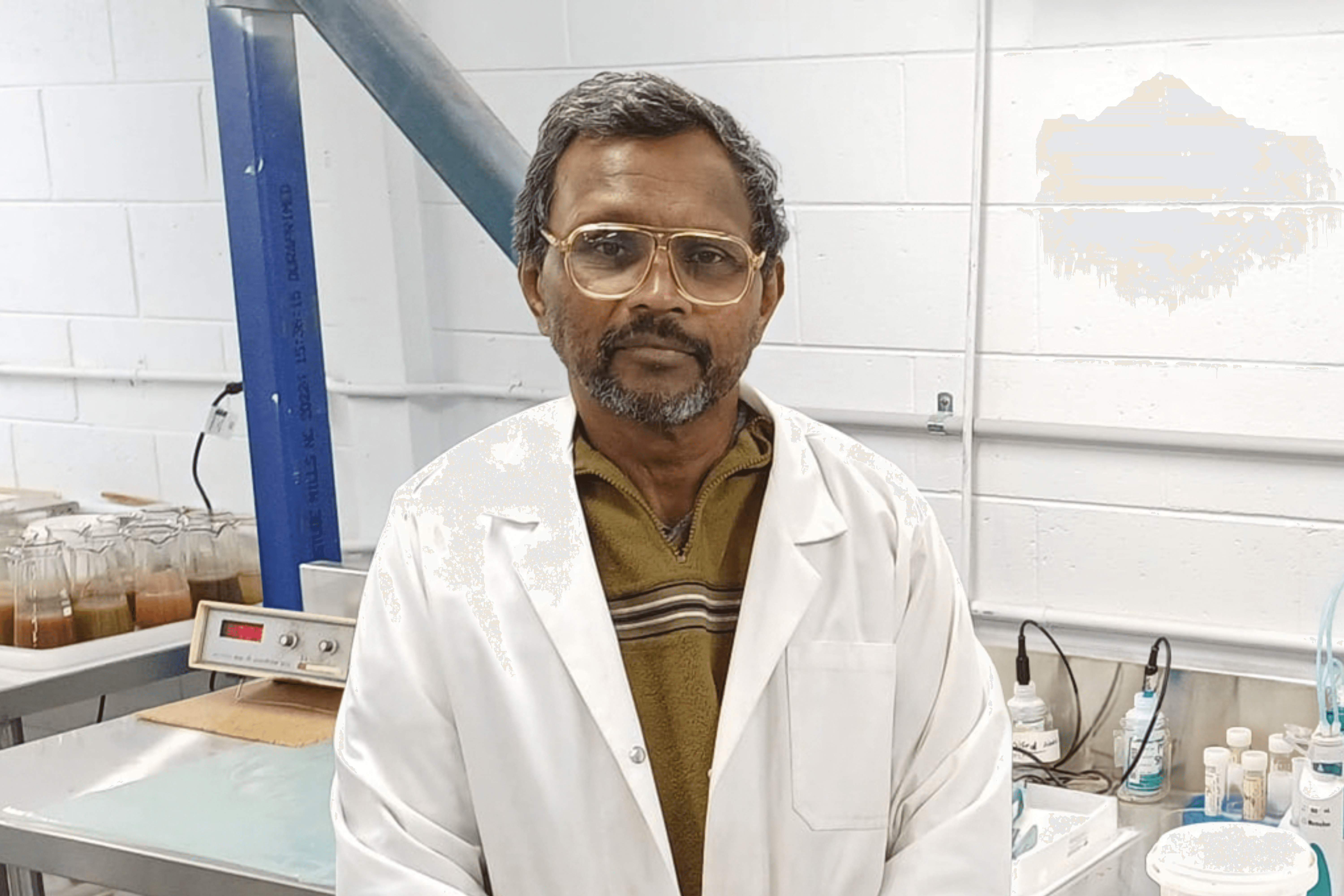
Anjali Krishnankutty has recently joined EGi as an Analytical Chemistry Laboratory Technician. She brings more than five years’ experience across commercial testing laboratories and university research facilities, covering sample preparation, wet chemistry, instrumental analysis and laboratory quality systems.
Anjali joins EGi from the Mark Wainwright Analytical Centre at the University of New South Wales. Her work there included extracting clay minerals from rock samples, determining the mineral composition of mining shotcrete, and following cement hydration by powder X-ray diffraction. She processed and refined her own diffraction data using Rietveld methods, and has worked across ICP-OES and a range of spectroscopic techniques.
Acid and metalliferous drainage (AMD) behaviour depends on which minerals are present in a material and how they react, so Anjali's direct experience of mineral characterisation is an asset to the team.
Before UNSW, Anjali worked as an analytical chemist and quality co-ordinator at Mauri (GWF), as a QC analyst at PACT, and as an assistant technical officer in the Climate Change Cluster at the University of Technology Sydney. She holds a postgraduate degree in chemistry.
"The work that EGi does is as varied as the many different mines it works at and that was a lot of the appeal in joining the company," Anjali said. "I have spent most of my career on mineralogy and wet chemistry, and this is a chance to apply that to a different set of questions."
Welcome to the team, Anjali.



CONTACT US