


At EGi, we run our own in-house laboratory and interpret all of our own test results. Further, we do not run test work for other consultants. This approach is central to the assurance we deliver to our clients, and it is also what makes EGi so different.
A founding principle for our approach is that a number only becomes meaningful when it is read by the people who understand both the method that produced it and the material it came from — and that understanding cannot be handed over with a spreadsheet of results.
a number only becomes meaningful when it is read by the people who understand both the method that produced it and the material it came from
EGi is one of only a very few specialist acid rock drainage (ARD) consultancies globally to operate its own geochemical laboratory. Most rely entirely on external commercial laboratories. This article outlines our approach and how it underpins the assurance we deliver.
Why interpretation should not be separated from testing
The principle is straightforward, even if it is not widely understood. In ARD geochemistry, many of the most important tests do not return a single, absolute value.
ARD results depend on the test. For example, on the acid-neutralising side of ARD work, the result depends on how the test is run. Every mineral dissolves in acid — some in minutes, some over millennia. Measure acid neutralising capacity one way and a sample might read 10 kilograms of sulphuric acid per tonne; measure it another way and it might read 5, or 20.
The result depends on the method and the material together. Correct interpretation means understanding the nature and limitations of the test method and the geochemical and mineralogical properties of the sample. That requires both deep hands-on experience and a thorough understanding of the method itself.
A number without that context can mislead. A technician following a fixed procedure at a large general analytical laboratory will not necessarily have the background or context to understand the test method or the sample. We will — because the people running the test are deeply integrated into our wider consulting team. Holding interpretation in-house protects the quality of your decisions and protects you from a result being misread downstream.
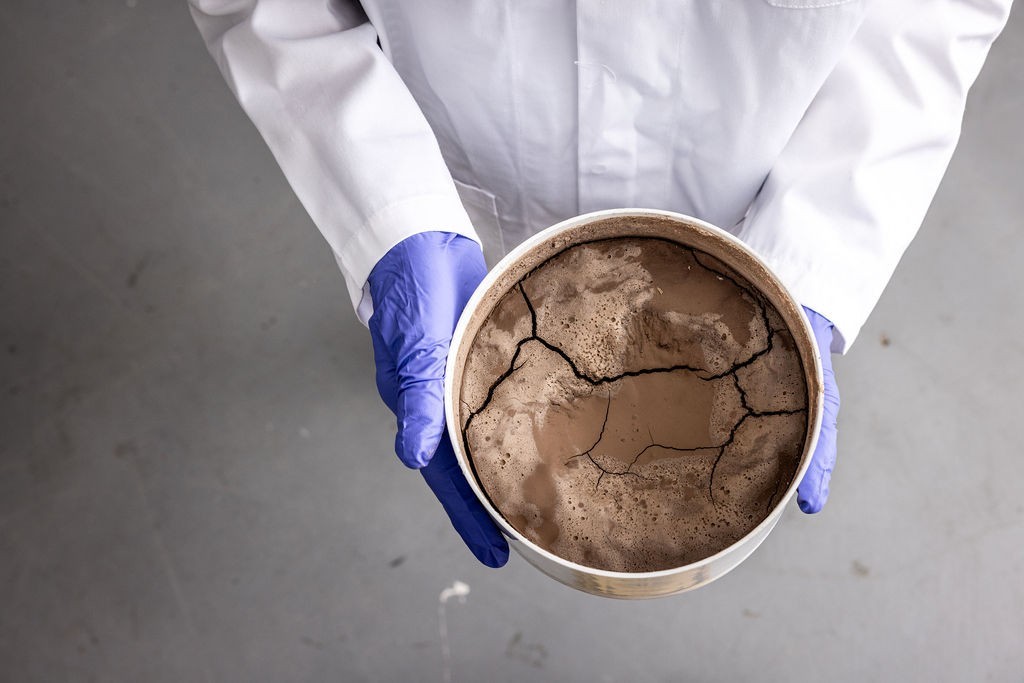
Testing is one part of a wider methodology
The laboratory does not work in isolation. Test work is one stage in a sequence that begins well before any sample reaches the bench — and every stage contributes to the assurance of the final result.
Geology first. We start by reviewing the geology to build an understanding of the deposit, its material types and their variability, as well as any existing assay and water-quality data. Most assessments begin with testing; ours begins with understanding what is in the ground.
A sampling and testing program designed for the site. Based on that geological and geochemical understanding, we select samples that genuinely represent the mine envelope and design a static and kinetic testing program tailored to the site's geology, constraints and environmental sensitivities. Choosing what to test, and why, is the step that determines whether the results will provide a robust understanding of the potential for environmental impact from mined materials. As our team puts it: we go through the process of selecting samples to test first — and that is the key.
Testing, then interpretation in context. Only then is the work undertaken in the laboratory, with results assessed against the geological context, classified, and translated into materials-management and segregation guidance that operations can actually use.
Each step depends on the one before it. The assurance we offer is not simply that the testing is done well — it is that the geology, the program design, the testing and the interpretation are held together by one team.
Methods we developed ourselves
Most of the tests we run in-house were developed by EGi or adapted and refined specifically for ARD work — so each comes with a genuine understanding of what it does and does not show.
Customised, not off a menu. Large commercial laboratories offer standard tests from a fixed list, with little room to adapt. Because we design the testing program and run the laboratory, we can tailor tests to a site's specific issues, make observations across a range of parameters during testing, and follow up on anything unusual rather than letting it pass as a line on a spreadsheet.
We co-authored the industry's reference handbook. EGi co-authored the AMIRA ARD Test Handbook, which became a standard reference for ARD test work globally and is used in laboratories and across the industry. Others quote from it; we wrote it.
A suite of tests refined for real materials. Our methods include the Acid Buffering Characteristic Curve, the single-addition, sequential, kinetic and calculated NAG tests, a modified ANC test that accounts for siderite, and sulphur speciation — all of which were developed or co-developed by EGi.
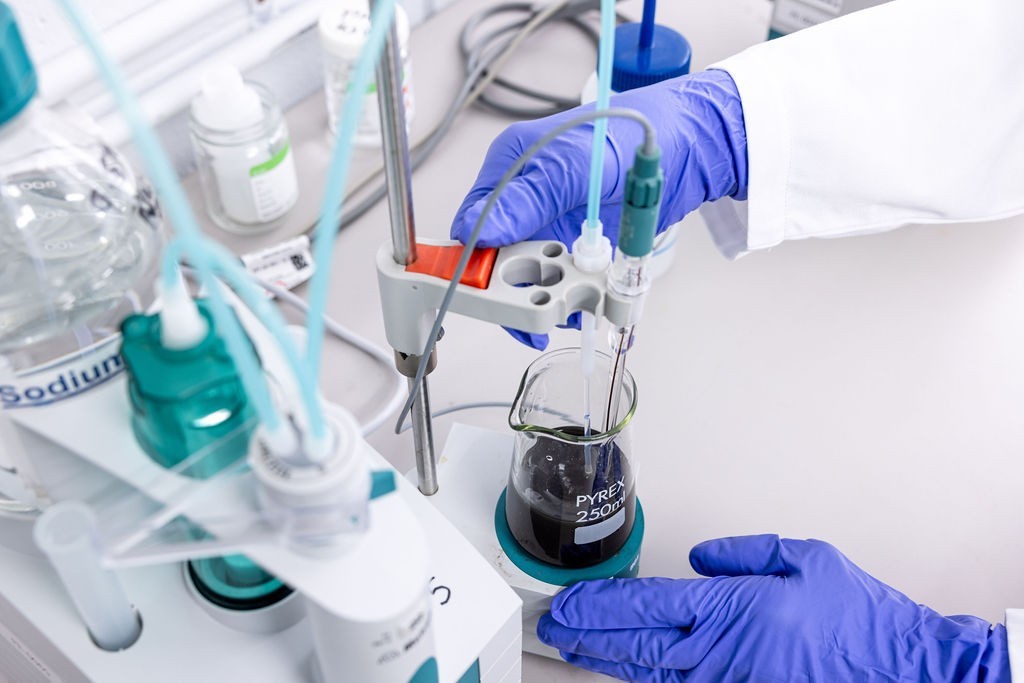
Tests built for the conditions you work in
Methods suited to all site conditions. Site conditions can vary from significantly water positive to water deficit. EGi developed kinetic leach column tests to operate under conditions of maximum oxidation rate. Where site conditions mean the oxidation rate will be attenuated by significant moisture our test results are adjusted to accommodate this.
Custom tests for specific mining problems. Because of the close alignment between the lab and EGi consultants, we can design and conduct fit-for-purpose bespoke tests for complex ARD, geochemical characterisation, and risk management questions. Further, having the in-house laboratory means we can carry out these tests in a timely manner compared to capacity-constrained general laboratories.
Leading in innovation and quality assurance
The attitude we held in pioneering the original tests carries through to today. We identify the ongoing challenges in testing and continue to improve and develop new methods. Following is a recent example:
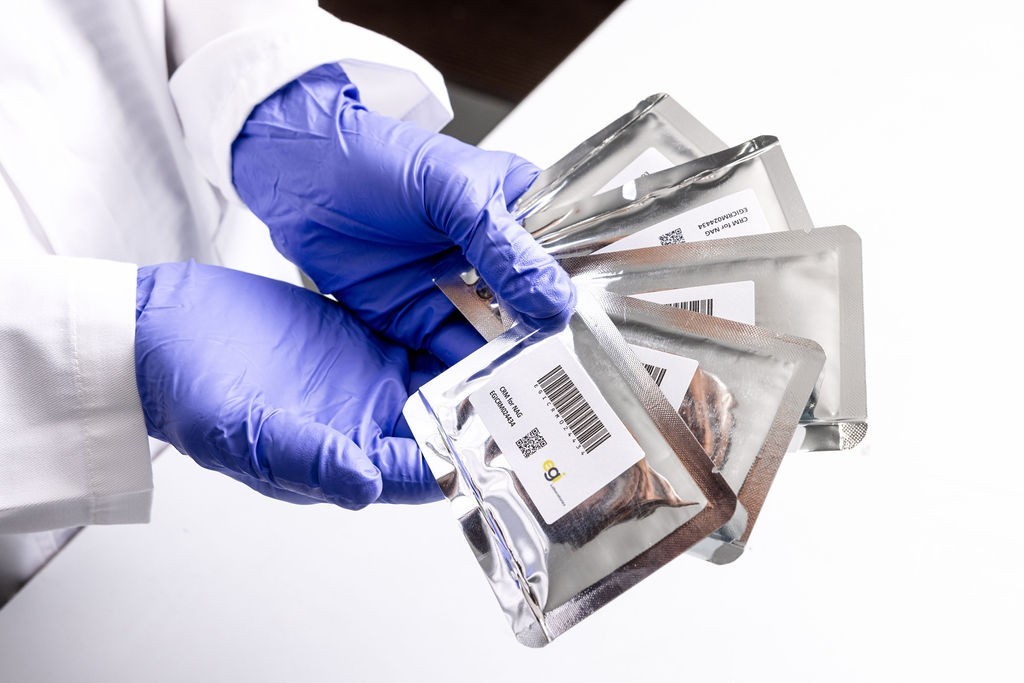
Certified Reference Materials: A standard practice in analytical laboratories is to use certified reference materials (CRM) to ensure the test method is producing accurate results — and historically there has been limited or no CRMs available for ARD work. A CRM is a sample with an independently guaranteed value that is run alongside client samples to confirm the test is performing correctly. EGi worked with Flinders University and Geostats — a global supplier of these materials to the mining industry — to create them for ARD tests, some for the first time. We are now leading the deployment of these reference materials for ARD testing, delivering a level of quality assurance that few other labs can match.
The assurance of one team, end-to-end
If you want genuine confidence that both the testing and its interpretation are sound, you need the firm that holds the full context — from the geology of your site, through the design of the program, to the testing itself and what the results mean for your operation. That is what the EGi laboratory is built to provide.
To discuss geochemical testing for your site, contact EGi at www.geochemistry.com.au.




CONTACT US